Our Impact by the Numbers

35% Patient Wait-Time Backlog Reduction
Patient wait-time backlog reduction, achieved in just 3 months of deploying Metools.

100% Clinic Retention
Every clinic deployment is still live — not a single one has churned.
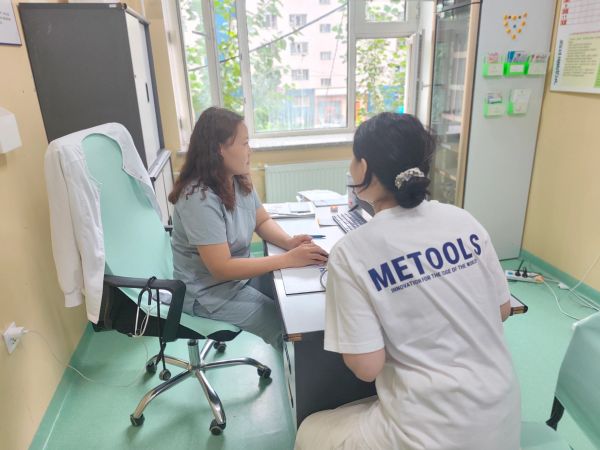
2,000+ Patient Records Digitized
Patient records digitized across our clinic partners in Mongolia, with 3 paying clinics live today.
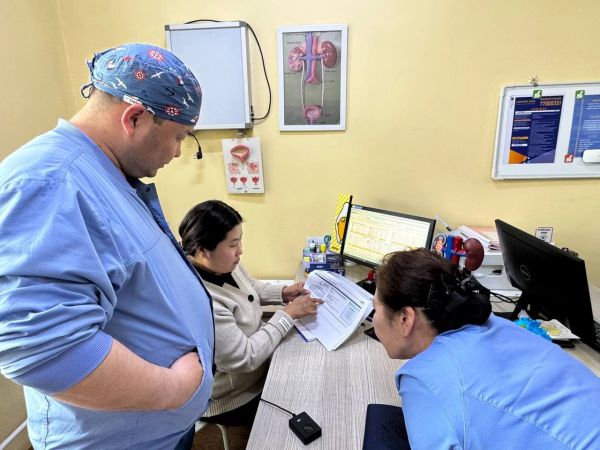
3x Ministry of Health Reporting Accuracy
Improvement in Ministry of Health reporting accuracy at deployed clinics.
5x Faster Field Case Transfer
Faster field case information transfer between clinics and health authorities.
3–4 Week Deployment Time
Average deployment time from start to finish, with zero IT staff required.

Government Partnership
Trusted by Mongolia's Ministry of Health
MeTools works directly with Mongolia's Ministry of Health to digitize health records and strengthen disease surveillance nationwide. For public hospitals, licensing fees are fully covered by the Ministry, making MeTools free for government facilities. Our system feeds directly into that reporting pipeline.
Partners & Recognition

The First Nationwide ERP System for Mongolia’s Zoonotic Disease Research Network
The First Nationwide ERP System for Mongolia’s Zoonotic Disease Research Network
The First Nationwide ERP System for Mongolia’s Zoonotic Disease Research Network
MeTools has successfully developed and implemented the first national ERP system for the Zoonotic Disease Research Center of Mongolia — a centralized digital infrastructure that integrates research, laboratories, hospitals, surveillance systems, administration, and field operations into one unified platform.
By replacing fragmented and pa
MeTools has successfully developed and implemented the first national ERP system for the Zoonotic Disease Research Center of Mongolia — a centralized digital infrastructure that integrates research, laboratories, hospitals, surveillance systems, administration, and field operations into one unified platform.
By replacing fragmented and paper-based systems, MeTools has enabled real-time nationwide health data sharing, strengthened infectious disease preparedness, improved rural healthcare coordination, and accelerated research and public health response capabilities across Mongolia.
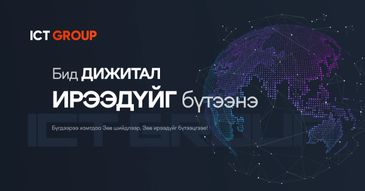
ICT Group of Mongolia Partnership
The First Nationwide ERP System for Mongolia’s Zoonotic Disease Research Network
The First Nationwide ERP System for Mongolia’s Zoonotic Disease Research Network
MeTools signed a strategic partnership with ICT Group of Mongolia for national rollout of our healthcare ERP platform — enabling deployment across public hospitals and government health facilities throughout the country.

Harvard President's Innovation Challenge Semifinalist
The First Nationwide ERP System for Mongolia’s Zoonotic Disease Research Network
Harvard President's Innovation Challenge Semifinalist
Named a 2026 Semifinalist in Harvard's President's Innovation Challenge — one of the most competitive innovation competitions in the world. This recognition validates MeTools' potential to transform healthcare delivery across emerging markets.
The Team Behind MeTools

Maralmaa Chinzorig — Founder & CEO
Spent seven years leading national health ERP digitization initiatives at Mongolia’s Ministry of Health, working directly with government agencies, hospitals, and rural healthcare providers. Her deep experience within Mongolia’s health system and established relationships across hospital, agency, and Ministry levels position her to lead MeTools’ adoption and expansion.
She is currently a JFK Fellow and Master in Public Policy candidate at Harvard Kennedy School and holds an MBA from Washington University in St. Louis with Highest Honors. She is also a certified Project Management Professional and Advanced Data Analyst. Her honors include the Knight Scholar designation, the Bauer Leadership Medallion, Honors in Innovation and Entrepreneurship from WashU’s Skandalaris Center, the Navab Social Impact Fellowship from Harvard Innovation Labs
Garvaa Chinzo — CTO
Architect of Mongolia's national eHealth infrastructure, having designed and built large-scale health IT systems deployed nationally across the country. Leads a 3-person core engineering team. Next hires planned in AI engineering, Central Asia market expansion, and customer success.

Dr. Enkhtsetseg Namsraijav — Clinical Advisor
Physician with 30 years of experience, including nearly half her career serving in rural healthcare settings. A former rural hospital operations manager who now works at Mongolia’s Medical Development Center, she ensures that MeTools is practical, clinically relevant, and grounded in the realities of low-resource care.

Ulziikhutag Batzorig — Public health researcher
Ulziikhutag Batzorig is a public health researcher with a Master of Public Health in Health Informatics and extensive experience in disease surveillance, public health data management, epidemiological analysis, and health information systems. His work focuses on strengthening surveillance systems, improving the use of health data for evidence-based decision-making, and supporting effective public health responses to communicable and emerging diseases.